
Are You Gaslighting Yourself with the Latest Self- Help Solution
The Problem With Quick Fixes & Certainty
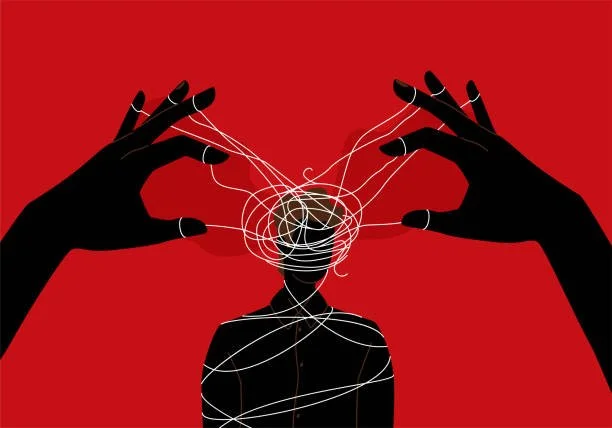
There’s a certain kind of self-help advice that makes me want to scream into the void. You’ve heard it before:
“Just count down and do it!”
“If they don’t get it, let them!”
“Change your mindset, change your life!”
At first glance, these ideas seem empowering. They give the illusion of control, of neatly packaged solutions. But here’s the problem: they’re built for neurotypical, well-resourced people running on full battery.
And if you’re burned out, neurodivergent, or navigating deep systemic stress, those one-size-fits-all hacks can actually make things worse.
The Oversimplification Ignores Biology
A lot of popular advice assumes your hesitation is a mindset problem, that all you just need is a trick, a hack, or a push to override your resistance and “just do the thing.”
But what happens when your body and brain are actively shutting you down?
The Science
When you’re dealing with burnout, autistic shutdown, ADHD paralysis, or chronic stress, your brain isn’t just “procrastinating.” Your prefrontal cortex (decision-making HQ) is offline, and your amygdala (fight-or-flight center) is in overdrive.
Forcing action in that state doesn’t help; it floods your system with more stress and shutdown.
So no, counting down or forcing movement isn’t going to work if your nervous system is in full crisis mode.
What Worked for Me
Lowering friction instead of forcing action (smallest next step, not full leap).
Understanding what my brain needs before shaming it for “laziness.”
Giving myself recovery time instead of treating burnout like a motivation issue.
The Certainty Trap
Then there’s the advice to just detach, let go, and stop trying to change things.
Which, in theory, is great for boundaries. But in practice? It can become an excuse to stop questioning yourself.
The Blind Spot
If you assume you already know the right answer, you stop evolving.
If you disengage from complexity, you miss opportunities to understand deeper truths.
If you write people off too quickly, you lose potential growth moments.
There’s a fine line between protecting your energy and shutting down curiosity. And sometimes? I’m the one who needs to rethink my certainty.
Instead of assuming I’m right, I ask: What could I be missing?
Instead of letting someone fail, I ask: Am I stepping back for the right reasons?
Instead of detaching from discomfort, I ask: Is there growth here if I stay engaged?
The Real Work
The problem with most pop self-help isn’t that it’s wrong, it’s that it’s too simple for the complexity of human brains and systems.
1. Stop Blaming Our Brain for Responding to Its Environment
Our brains aren’t broken. Burnout isn’t a lack of willpower. If we can’t move, ask why. instead of shaming
2. Replace “Motivation Hacks” With Nervous System Support
If I’m stuck, I don’t push through; I lower the resistance.
If I’m overwhelmed, I don’t force focus; I remove inputs.
If I am burned out, I don’t self-discipline, I self-regulate.
3. Question Your Own Certainty as Much as You Question Others’
If someone’s making a choice you don’t agree with, I ask: Am I actually right, or am I just assuming I know best?
If I keep running into the same problem, I ask: Am I truly stuck, or do I need a different perspective?
If I find myself detaching from hard conversations, I ask: Is this self-preservation or avoidance?
Real Change Isn’t a Hack—It’s a Philosophy
If there’s one thing I’ve learned, it’s that growth isn’t about forcing outcomes—it’s about expanding how we see ourselves and the world.
We don’t need tricks to override our brains.
We need ways to understand them better.
We don’t need certainty to feel safe.
We need the courage to question our own thinking.
That’s the difference between self-help that keeps you stuck and philosophy that actually helps you evolve.
Your Turn
What’s one belief or habit you’ve had to unlearn to actually make progress? Drop it in the comments—let’s challenge our own thinking together.
